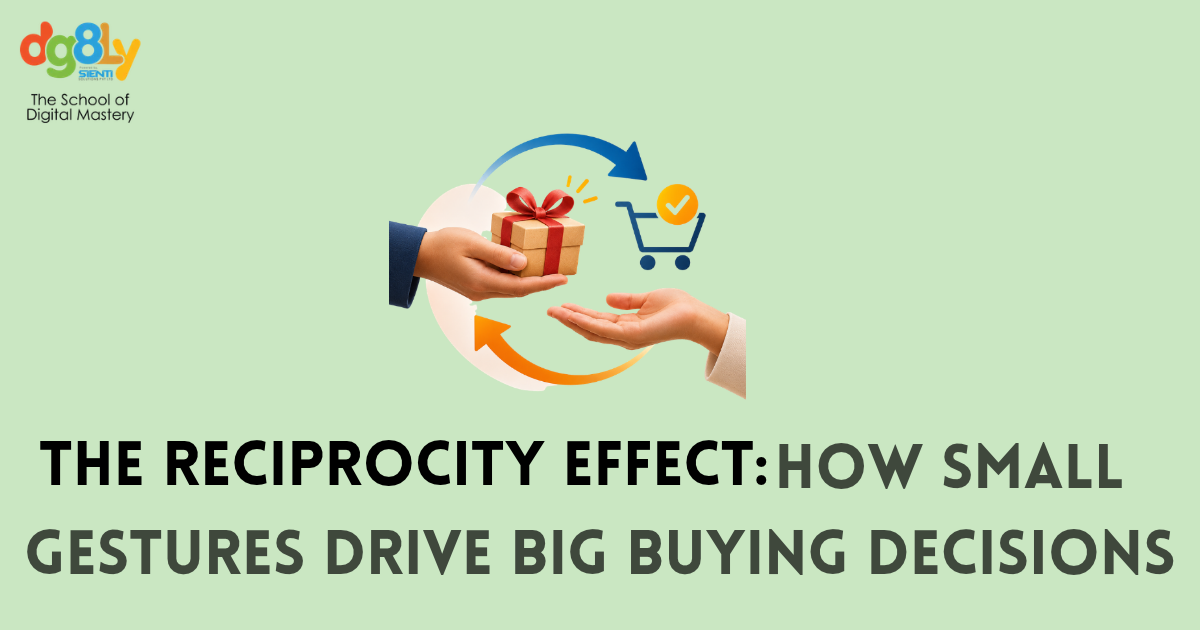
The Reciprocity Effect: How Small Gestures Drive Big Buying Decisions
Introduction
Have you ever received a free sample at a supermarket and felt encouraged to buy the product? Or received a useful gift from a brand and developed a positive feeling towards that company?
These situations are examples of the Reciprocity Effect.
Reciprocity is a simple psychological principle that influences human behaviour. When someone does something good for us, we often feel naturally inclined to return the favour. In marketing, businesses use this principle to build trust, strengthen customer relationships and encourage buying decisions.
Let's understand how this works and how businesses can use it effectively.
What Is the Reciprocity Effect?
The reciprocity effect is the tendency of people to respond positively when they receive something valuable from another person or business.
In simple words, when someone gives us something useful or meaningful, we often feel motivated to give something back.
This does not always mean returning a physical gift. It could be recommending a business, subscribing to a newsletter, following a brand on social media or eventually purchasing a product.
For example, imagine a digital marketing company offering a free SEO audit to a business owner. The audit identifies website problems and suggests ways to improve search rankings.
The business owner receives useful information without paying anything. This creates a positive impression and may encourage them to consider the company when they need professional SEO services.
That is reciprocity in action.
How Does Reciprocity Influence Buying Decisions?
Small gestures can create positive experiences that influence how customers think about a brand.
Here are some ways reciprocity works in marketing.
1. Free Samples Encourage Product Purchases
Free samples are one of the most common examples of reciprocity in marketing.
When customers get an opportunity to try a product without paying, they can experience its quality before making a purchase.
For example, a skincare brand offering free product samples allows customers to test the product. If they like the experience, they may be more willing to purchase the full-size product.
2. Valuable Free Content Builds Trust
Businesses can offer useful information through blogs, videos, e-books, tutorials and webinars.
For example, a financial consulting company could publish a free guide explaining basic investment concepts. Readers who find the information useful may develop trust in the company and approach it for professional advice.
This is particularly effective in digital marketing because businesses can provide value to potential customers even before they become paying clients.
3. Free Consultations Create Customer Confidence
Customers often hesitate before purchasing expensive products or services because they are unsure whether they are making the right decision.
A free consultation can help remove this hesitation.
For example, an interior design company could offer a free initial discussion to understand a customer's requirements and suggest suitable design ideas.
The customer receives professional guidance, while the business gets an opportunity to demonstrate its expertise.
4. Personalised Offers Make Customers Feel Valued
A small personalised gesture can make a customer feel recognised and appreciated.
For example, an online store sending a special birthday discount or a personalised product recommendation creates a more meaningful customer experience.
Such gestures can strengthen customer relationships and encourage repeat purchases.
5. Helpful Customer Support Builds Loyalty
Reciprocity is not always about gifts or discounts. Sometimes, simply helping customers can make a significant difference.
Imagine a customer contacting a company with a problem. Instead of immediately trying to sell another product, the support team patiently explains the solution and helps resolve the issue.
This positive experience can increase customer confidence and encourage long-term loyalty.
How Businesses Can Use Reciprocity in Digital Marketing
The reciprocity effect can be incorporated into different digital marketing activities.
Some practical strategies include:
Content Marketing: Publish informative blogs, guides and videos that genuinely solve customer problems.
Email Marketing: Share useful tips, free resources and exclusive offers with subscribers.
Social Media Marketing: Provide helpful information, answer questions and engage with followers.
Lead Generation: Offer free e-books, checklists, templates or consultations in exchange for contact details.
Customer Experience: Provide prompt support, personalised recommendations and meaningful after-sales assistance.
The objective is to offer genuine value before expecting customers to make a purchase.
Does Reciprocity Always Work?
Although reciprocity can influence buying behaviour, it does not guarantee a sale.
Customers may appreciate a free gift or service without purchasing anything. The value offered must be relevant to their needs and should create a positive experience.
Businesses should also avoid making customers feel pressured or obligated to buy something simply because they received a free benefit.
The most effective approach is to give something useful without expecting an immediate return. When customers recognise genuine value, trust can develop naturally.
Conclusion
The reciprocity effect demonstrates that small gestures can create meaningful relationships between businesses and customers. A free sample, a helpful blog, a personalised offer or excellent customer support may appear simple, but these actions can influence customer perception and buying decisions.
For businesses, the lesson is clear: Don't focus only on selling. Focus on giving customers a reason to trust your brand.
Understanding customer psychology is an important part of successful digital marketing. If you want to learn practical marketing strategies, customer behaviour, SEO, social media marketing and other essential skills, choosing the best digital marketing course in Kochi can help you build the knowledge and confidence needed to succeed in the digital marketing industry.